NDR Symphonie Orchester in the Elbphilharmonie - Credit Peter

For Seasons

Art // Stage

0:00

Vivaldi’s Four Seasons gives birdsong, insects, flowing water and storms a musical form. FOR SEASONS draws on those images to translate historical climate and environmental data into changes within the score.

Climate change enters Vivaldi’s score.

In 2019, Jung von Matt invited us to recompose the work for the NDR Elbphilharmonie Orchestra. The new score premiered at the Elbphilharmonie in Hamburg, conducted by Alan Gilbert.
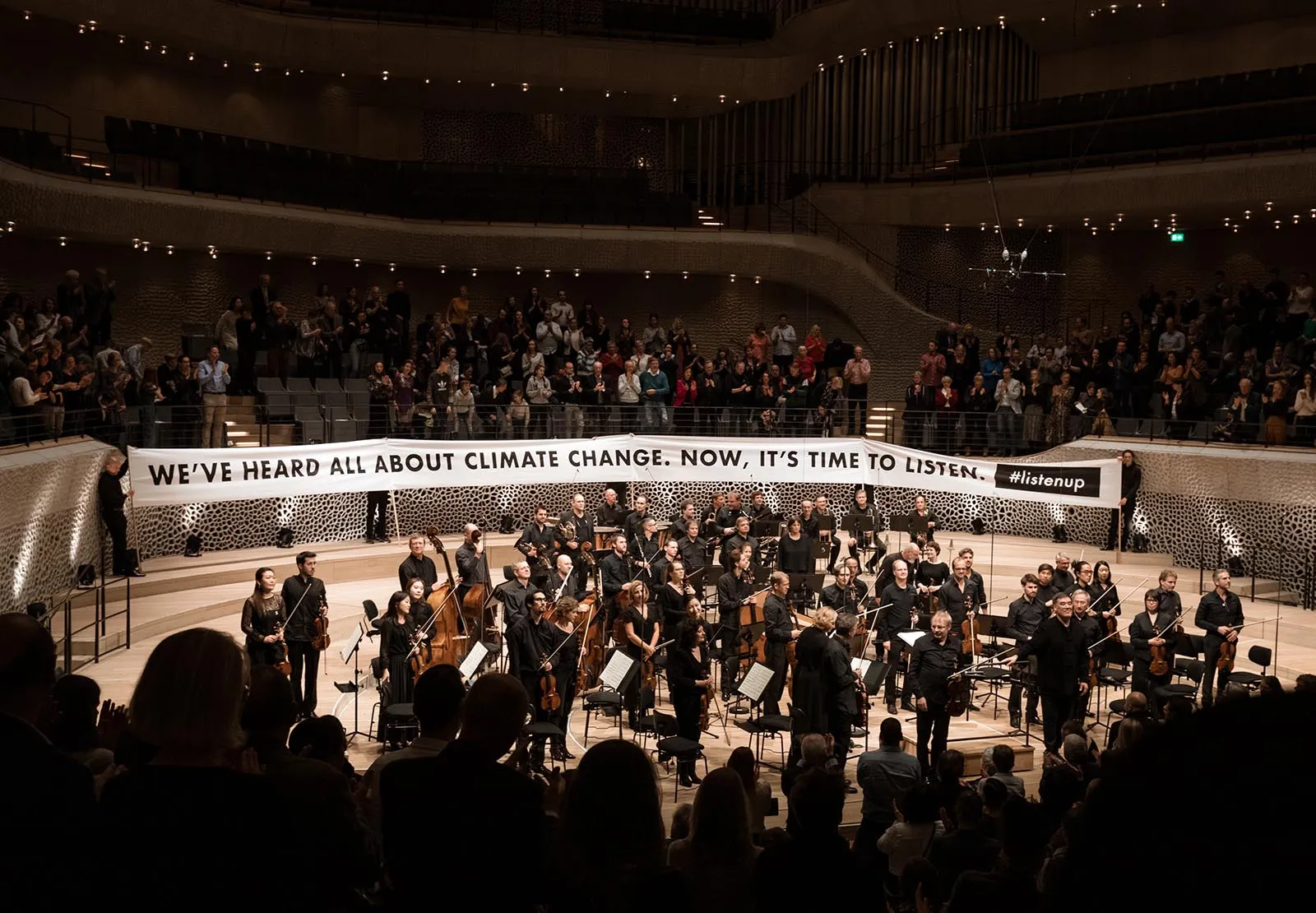
The orchestra and audience at the Elbphilharmonie with a banner calling for climate action
FOR SEASONS at the Elbphilharmonie, Hamburg, 2019.

Summer arrives
in Vivaldi’s Spring.

Climate data transforms both the structure of the four concertos and the musical images within them. Summer motifs enter during Spring, bird calls lose notes, and storm passages interrupt the familiar sequence.

In Spring, the bird motif loses 15% of its notes, reflecting the decline in bird populations. The gaps become part of the musical phrase.

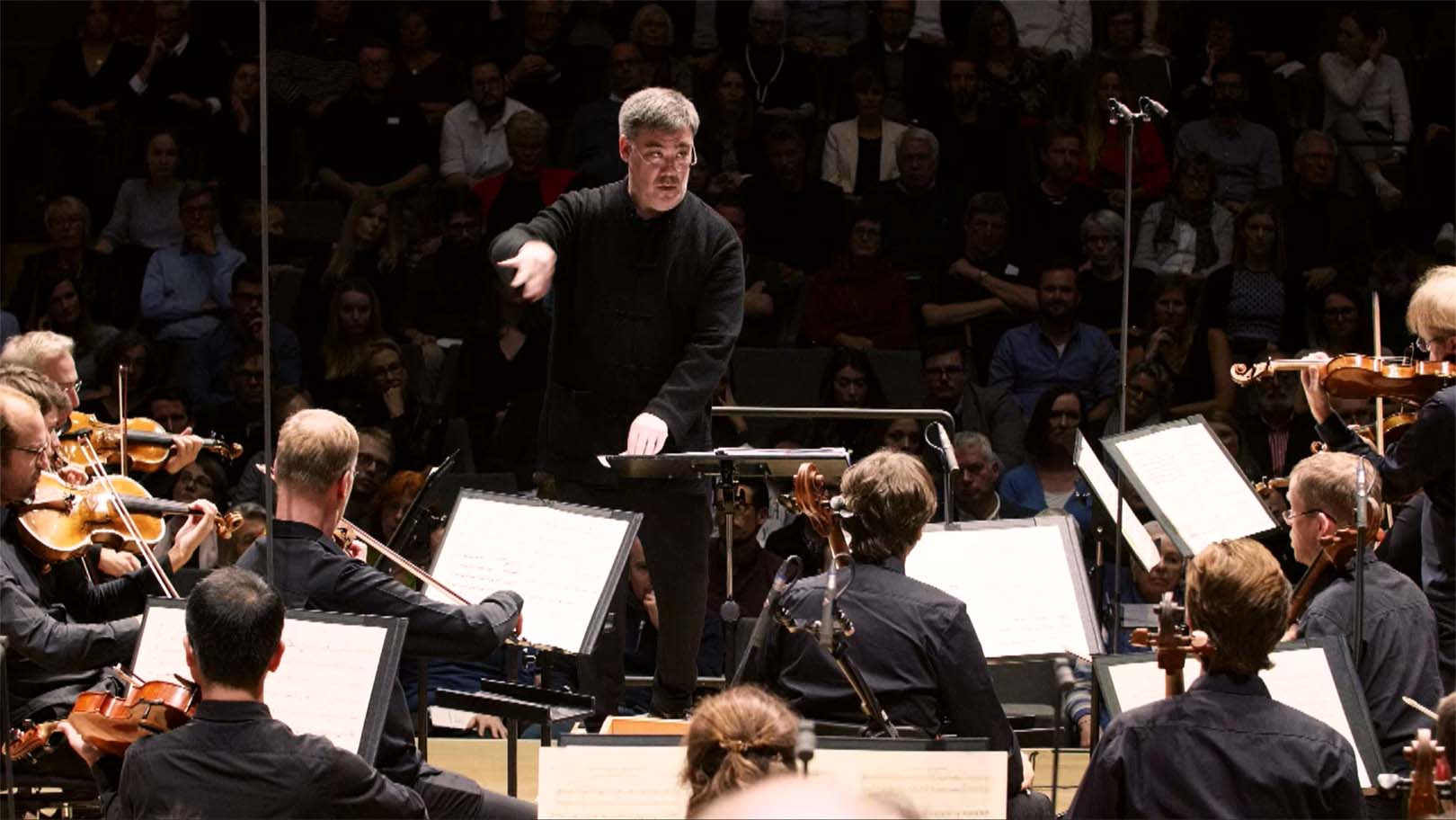
Conductor and string players performing FOR SEASONS
The transformed score performed by the NDR Elbphilharmonie Orchestra.

We preserved Vivaldi’s solo violin part and defined how climate and environmental data would transform the orchestra around it. Our algorithms applied these mappings to the score: CO₂ levels lengthen notes, temperature anomalies transpose harmonies, and vegetation phases shift seasonal motifs.

The solo violin anchors the changing score.

Against these changes in harmony, timing and instrumentation, the unchanged violin remains a familiar reference. Listeners can hear how far the surrounding musical world has moved away from Vivaldi’s original.

Alan Gilbert and the NDR Elbphilharmonie Orchestra performing FOR SEASONSPlay Video
FOR SEASONS at the Elbphilharmonie, conducted by Alan Gilbert · 2019. Watch on YouTube ↗

The violin holds its ground.

We kept the solo violin exactly as Vivaldi wrote it, an anchor as the orchestra around it drifts further away. Seasonal motifs arrive earlier or later as growing seasons shift.

Temperature data decides how many extra instrumental groups join, expanding the original ensemble into a symphonic orchestra.

Project Scope

Reimagining Vivaldi’s Four Seasons as a wake-up call on climate change.

Explore project scope ↗

Function of Sound

Data sonification.

We make climate change audible through Vivaldi’s music. The original solo violin remains a reference as environmental data transforms the orchestra around it, allowing listeners to hear how far the familiar world has shifted.

Sound Experience

300 years. One concert.

In the concert hall and via live stream, audiences experienced 300 years of climate change in musical time-lapse. The live orchestra turned that long transformation into an immediate, emotional encounter.

Content

51

bars of Winter disappear.

Shifting growing seasons move musical motifs earlier or later. Summer arrives during Spring, and Winter is cut short: the familiar order of the concertos begins to slip.

Content

More hot days. More orchestra.

Hot-day data determines how many additional instrumental groups enter. Vivaldi’s original ensemble expands into a symphonic orchestra, making the rising heat audible as growing weight and intensity.

Content

Birdsong with gaps.

In Spring, we removed 15% of the notes from the bird motif to reflect declining bird populations. The melody carries that loss in its interrupted flow: the missing notes become part of what listeners hear.

Content

Time stretches. Harmony shifts.

Rising CO₂ levels lengthen the notes; temperature anomalies shift the harmonies. Applied across all four concertos, these changes alter the pace and harmonic character of the entire work, reaching beyond the individual images of birds, insects and storms.

Studio Contribution

From data to a live score.

Our sound concept defined how each dataset would change the music. We developed the algorithms and edited the score for live performance. The arranger developed additional instrumental passages from our transformed material; we agreed the dynamic markings together.

Credits

  • ClientNDR Elbphilharmonie Orchestra
  • Premiere2019 · Elbphilharmonie Hamburg
  • Creative agencyJung von Matt AG
  • ProductionMarkenfilm Crossing
  • Sound partnerMarkenfilm SPACE
  • PR / marketingSegmenta Communications
  • CompositionKLING KLANG KLONG
Selected awards
  • Cannes Lions — Gold, Creative Data; Bronze, Radio & Audio
  • One Show — Gold and Best of Discipline, Creative Use of Data / Storytelling
  • D&AD — Graphite Pencil, Sound Design & Use of Music
  • New York Festivals — Gold, Best Use of Music and Sound Design
  • ADC Germany — Gold, Data-Driven Creativity

Further Reading

Close ×
Open original ↗