
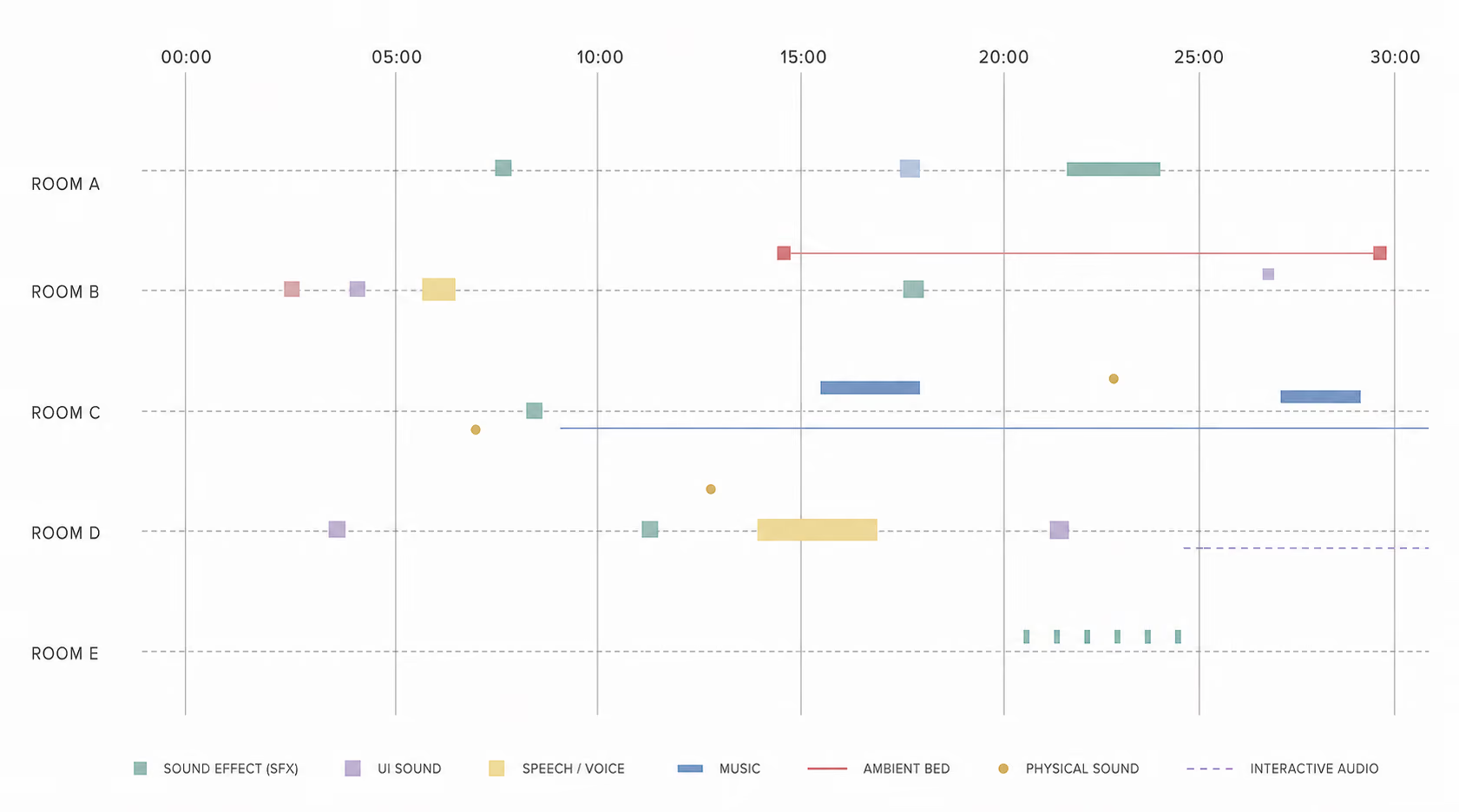
Sound is immersive by nature. It travels through architecture, reflects from surfaces, changes with distance and reaches the body from more than one direction. Even a single loudspeaker in a room gives information about scale, material and position.
The question is not whether sound surrounds us. The question is how deliberately that spatial quality is composed, structured and used within an exhibition, installation or spatial experience.
For KLING KLANG KLONG, immersive sound begins when this condition becomes a design material. We compose how sound occupies space, how it guides attention, how it connects zones and how it gives presence to content, movement and architecture.
Immersive sound describes the intentional use of sound's spatial behaviour.
It is not defined only by surround systems, 3D audio or the number of loudspeakers. These can be useful tools, but immersion begins with how sound is placed, timed, distributed and perceived within a specific environment.
In exhibitions and installations, this approach can create orientation, depth, proximity, tension, intimacy or collective presence. It can make a space feel inhabited, connect separate rooms into one continuous experience or allow visitors to encounter content through movement and listening.
In exhibitions, sound is part of how visitors read a space. It can support the rhythm of a route, mark transitions between chapters, separate acoustic zones or connect multiple media elements into one coherent environment.
This requires more than producing audio content. It means deciding how sound relates to architecture, scenography, visitor movement and the other media in the space. The work often begins by asking what kind of presence the sound should create: should it guide attention, make content feel physical, connect distant rooms, support interaction or shape an emotional arc?
Immersive sound does not need to dominate the room. Some of the strongest immersive work is quiet, precise and structural. It makes the experience feel coherent without constantly drawing attention to itself.
The sound layer can operate in different ways, depending on the format and intention of the project.
Spatial composition
Sound is distributed through the architecture, allowing visitors to move through musical or sonic layers.
Acoustic zoning
Different areas receive distinct sound worlds while remaining part of one larger spatial composition.
Narrative soundscapes
Sound unfolds across rooms, moments or perspectives, supporting a story that is experienced physically.
Interactive sound environments
Sound responds to presence, movement, gestures or visitor choices.
Data-driven and generative systems
Sound changes according to data, rules or live conditions where this is meaningful for the project.
Immersive sound is closely connected to our broader practice of sound scenography.
While immersion focuses on spatial presence and perception, sound scenography connects this with dramaturgy, composition, interaction and the structure of the visitor journey. It asks how sound should behave across the whole experience: where it begins, where it withdraws, how it connects spaces and how it changes the way visitors understand what they encounter.
Spatial audio is one of the technical and compositional practices that can support immersive sound. It helps define position, movement, depth, proximity and the relationship between sound, architecture and listener position.
For the broader visitor-journey framework behind immersive listening, read Sonic Dramaturgy.
The technical side of immersive sound depends on how playback systems, renderers and spatial audio formats shape presence, depth and listening position. For more detail, see Spatial Audio Systems & Renderers and Spatial Audio Formats & Methods.
Examples of immersive sound in our work include:
A spatial sound environment unfolds across the realms of Water, Air and Land. Spatial sound and haptic feedback form a living ecosystem that visitors experience through movement, listening and vibration.
A responsive sound and light environment surrounds the body with changing sonic states. Ceiling speakers, exciters and low-frequency elements create a spatial field that shifts between passive, reactive and interactive modes.
A walk-in 3D sound installation in which 24 loudspeakers form the spatial body of a machine-like entity. Visitors generate and manipulate sounds from a central stage as the soundscape unfolds around them.
An orchestral score unfolds across four floors of the pavilion. Visitors move through distributed musical layers, experiencing composition as a spatial journey through the building.
A Sonic Journey Through The Universe
At TED2024, spatial sound, field recordings and data-driven music guided the audience from Earth toward cosmic scale. The performance was experienced entirely through sound in a surround environment.
What is immersive sound?
Immersive sound is the intentional use of sound's spatial behaviour. It shapes how sound occupies a space and how visitors perceive, move through and feel present within it.
Is all sound immersive?
Sound is immersive by nature because it travels through space and reaches the body from multiple directions. Design begins when this spatial quality is composed and structured intentionally.
Is immersive sound the same as spatial audio?
No. Spatial audio describes techniques for distributing and localizing sound in space. Immersive sound describes the experience created through those techniques and through composition, timing, architecture and visitor movement.
How is immersive sound used in exhibitions?
It can guide attention, connect rooms, define zones, support narrative structure and make content physically present within the space.
Does immersive sound always need many loudspeakers?
No. Multichannel systems can create complex spatial experiences, but immersion depends on intention, placement, timing, acoustics and the relationship between sound and space.
Planning an exhibition, installation, or spatial experience?
We design immersive sound that shapes presence, orientation, and the way visitors move through space.
