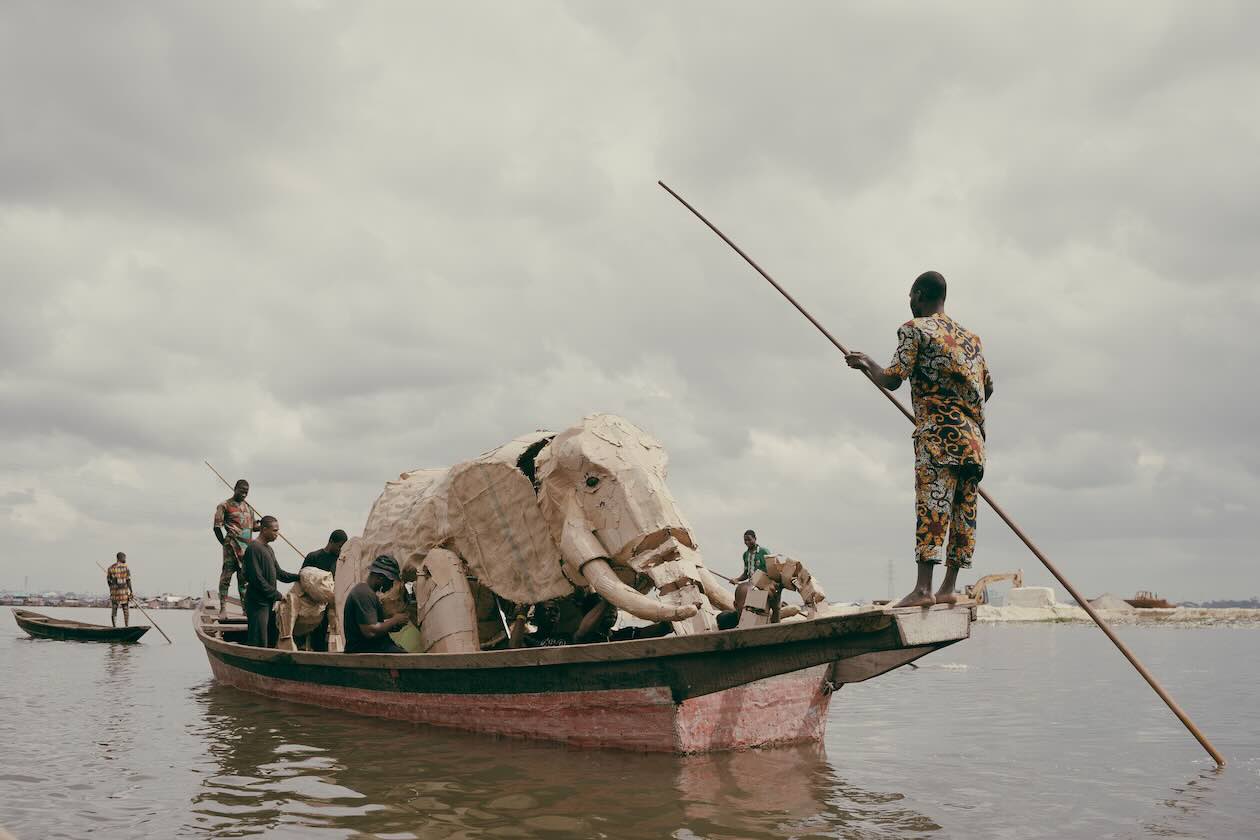
Sounds of the Unseen is a generative sound work for THE HERDS, where animal migration data, weather and ecology continuously shape an evolving composition across land, sea and air.
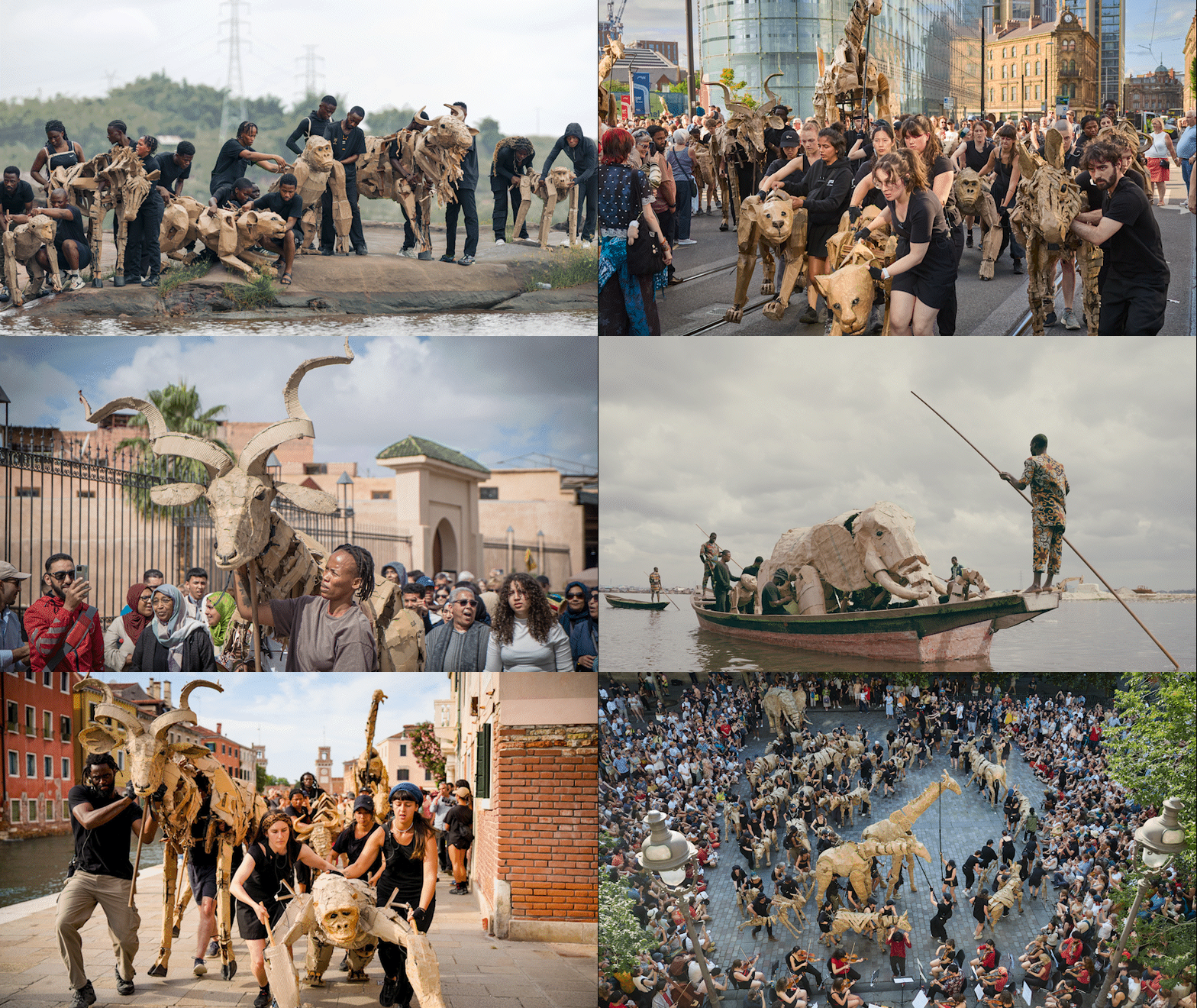
OUR ROLE Creative Direction, Concept, Production, Programming, Sound Design // CREATIVE PRODUCTION, CONCEPT, PRODUCTION MIIQO STUDIOS // PHOTOS Header Image by The Walk Productions, photography by Vegard Aasen // GIF ANIMATION 1) Kinshasa - Congo Basin (c) Berclaire for The Walk Productions // 2) Manchester City Centre (c) David Levene // 3) Medina. Marrakesh, Morocco. (c) Oussama Oulhiq // 4) HM King Charles meets THE HERDS at Lancaster House (c) Jaber Ahmed (DEFRA) // 5) Makoko River, Lagos. Photograph by Kashope Faje, for 88 Life Studios // 6) Venice, Italy. Photography by Andrea Avezzù. Courtesy of La Biennale di Venezia // 7) Paris, France. Photography by David Levene // YEAR 2025
SOUND OF THE UNSEEN is a generative sound work created as an artistic contribution to THE HERDS, a public art project tracing a 20,000 km route from the Congo Basin to the Arctic Circle. Developed together with Miiqo Studios, the work transforms animal migration data into a continuously evolving composition shaped by movement, seasonality, weather and local ecology.
The composition is based on over 6.5 billion animal movement data points provided by Movebank and the Max Planck Institute of Animal Behavior. Birds crossing continents, whales navigating oceans and land mammals roaming vast terrains become part of one connected sonic system. A custom-built sound engine interprets the data in real time, generating musical gestures, harmonic movement and textural change directly from migration behaviour and environmental conditions.
The work unfolds across three interconnected sonic layers. A deep drone shaped by land-dwelling species forms the harmonic foundation, while higher tones respond to movement in the air and fluid pitch structures trace migration across the sea. Every GPS signal subtly alters mood, pitch and texture. Seasonal migration patterns structure the dramaturgy of the composition into four harmonic chapters, each with its own tonal centre and chord progression.
Using a curated dataset of around two million migration points covering a full year of movement, the system compresses seasonal cycles into a three-day generative journey that never repeats itself exactly. As the virtual route shifts from tropical forests toward polar landscapes, the composition adapts continuously to changing species, direction and weather conditions. We developed the project as a form of data sonification and generative music that transforms ecological movement into a living sonic memory of biodiversity in motion.
This evolving music now weaves through the BBC documentary podcast The Herds – Life-Sized Puppets Flee Climate Change, carrying the voices of migration into sound.
Listen on BBC Sounds
Planning an exhibition, museum, or installation?