BEHIND THE WORDS is an immersive audiovisual installation where AI-driven analysis of political speeches shapes synchronized sound and visual compositions across three spatially organized political spectrums.
An artwork by KLING KLANG KLONG in collaboration with SCHNELLE BUNTE BILDER // CAMERA Frank Sauer // YEAR 2025
BEHIND THE WORDS is an immersive audiovisual installation exploring the emotional structures hidden within political speech. Developed together with Schnelle Bunte Bilder, the project translates AI-driven analysis of political speeches into synchronized sound and light compositions organized across three immersive rooms.
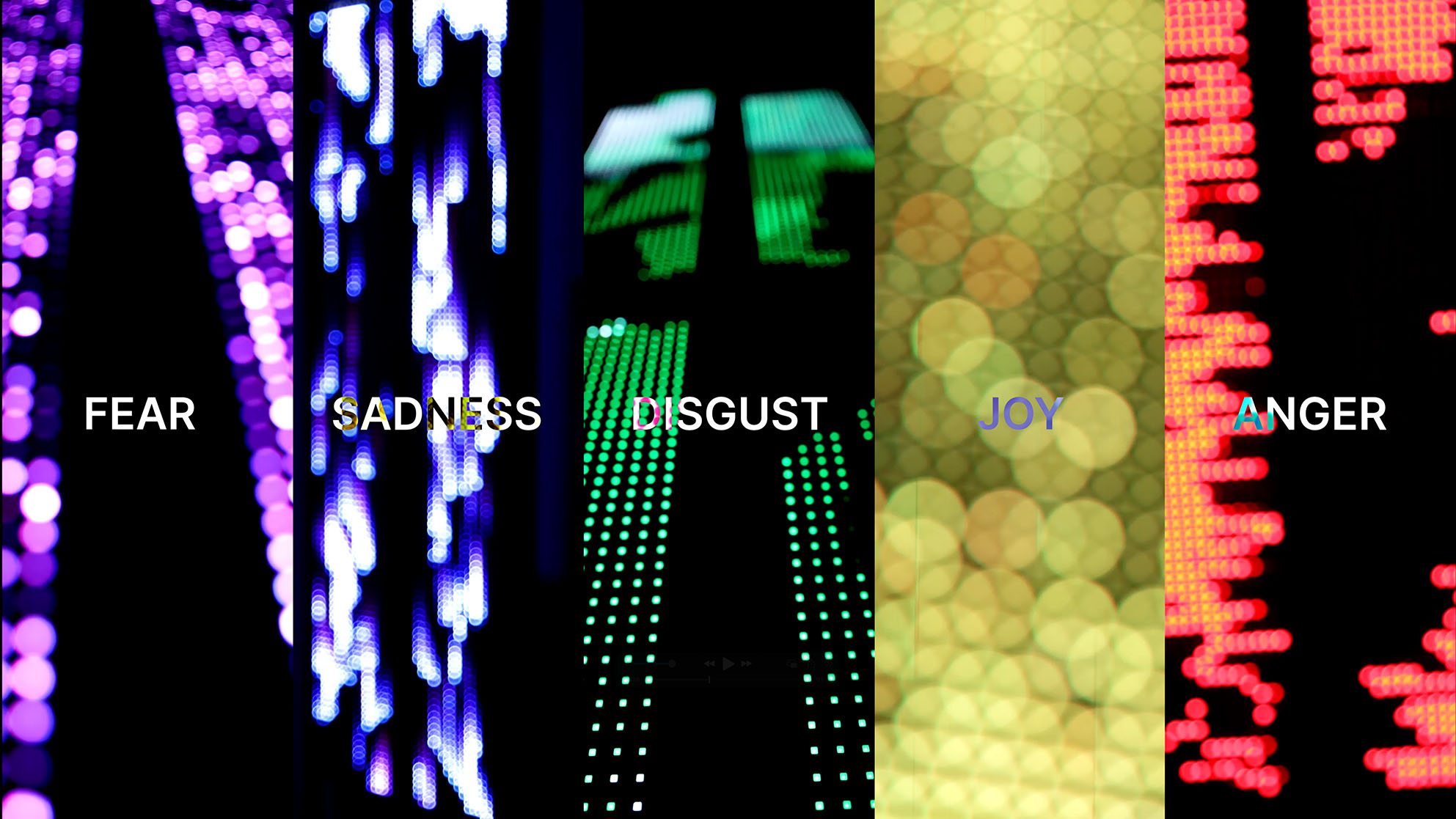
Each room represents a different political spectrum and contains four vertically positioned LED panels with integrated speakers. Every panel is dedicated to one presidential candidate and based on the first speech of their most recent campaign. Emotional and semantic analyses generated through AI-based systems structure the installation’s audiovisual behaviour, allowing visitors to compare emotional patterns, rhetorical dynamics and political positioning spatially and simultaneously.
The installation analyzes emotional categories including joy, anger, fear, disgust and hate, alongside hate speech intensity, race-related stress and fact-checking dynamics. These analyses are translated into compositional and visual parameters shaping synchronized sound and moving image structures across the three rooms. Spatial audio, composition and moving image remain tightly interconnected, turning political language into an immersive comparative environment.
We developed the project’s generative sound system and data sonification structure using Max/MSP, OSC-controlled composition systems and spatial audio environments. The installation treats political speech as emotional and behavioural material translated into synchronized audiovisual composition through sound, spatial organisation and machine-assisted analysis.
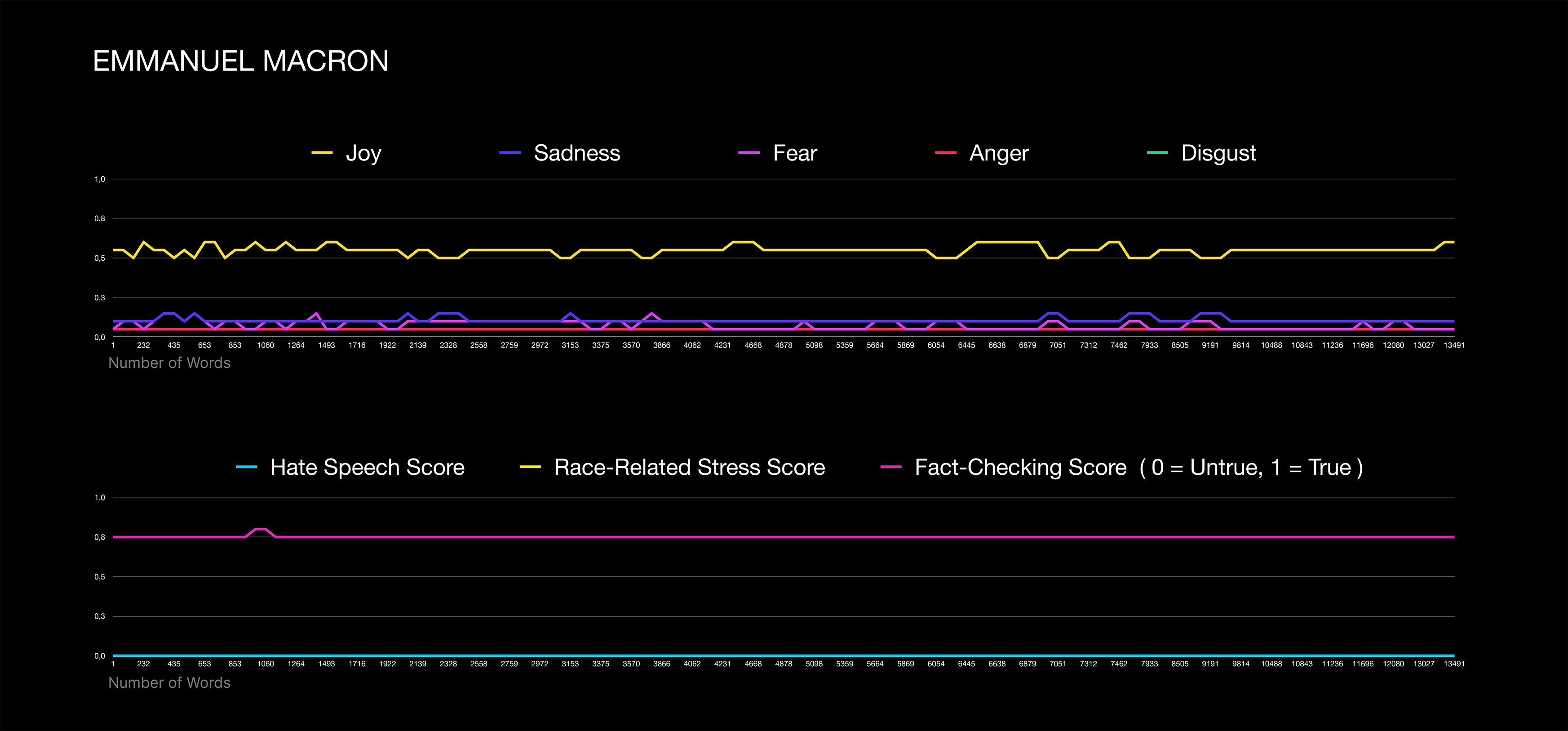
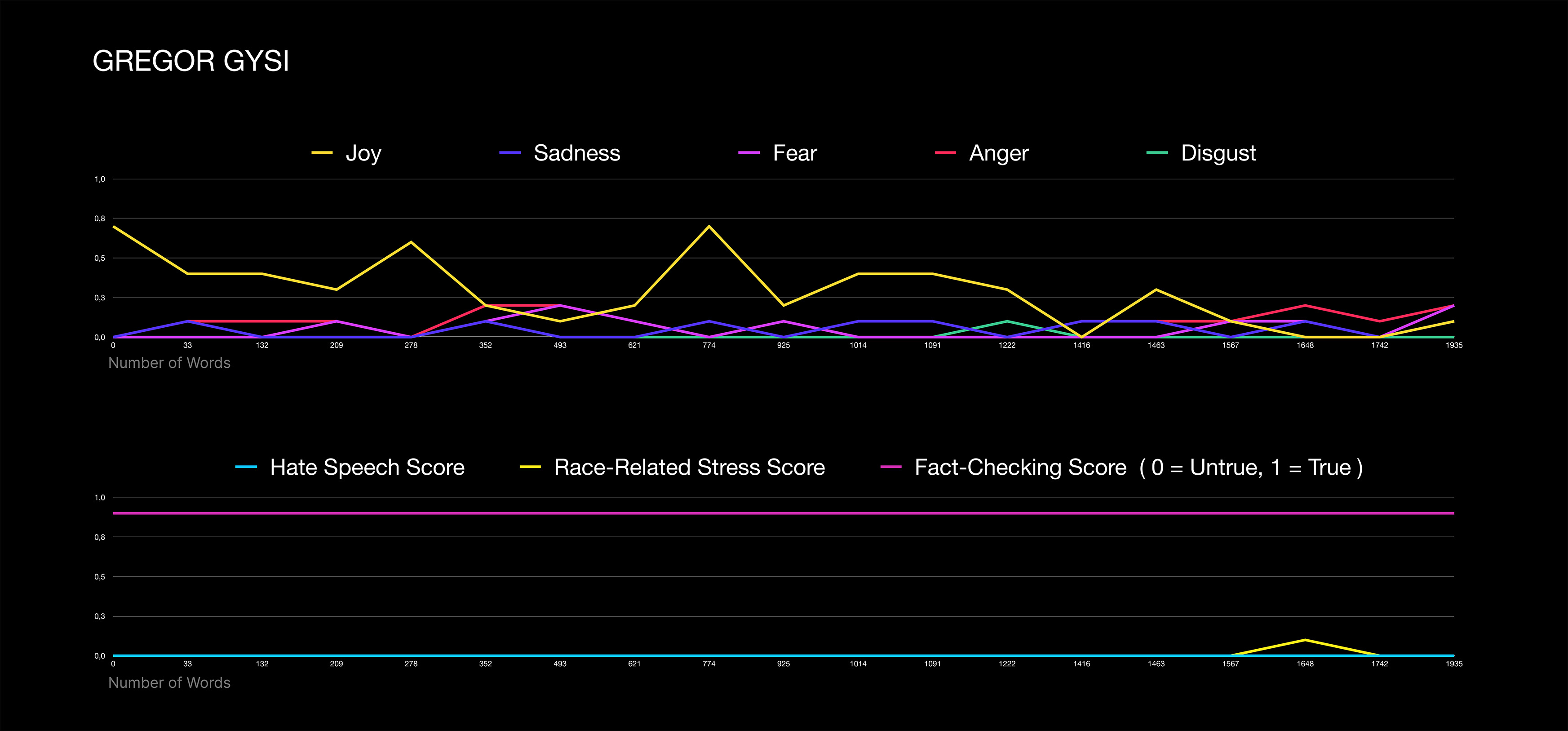
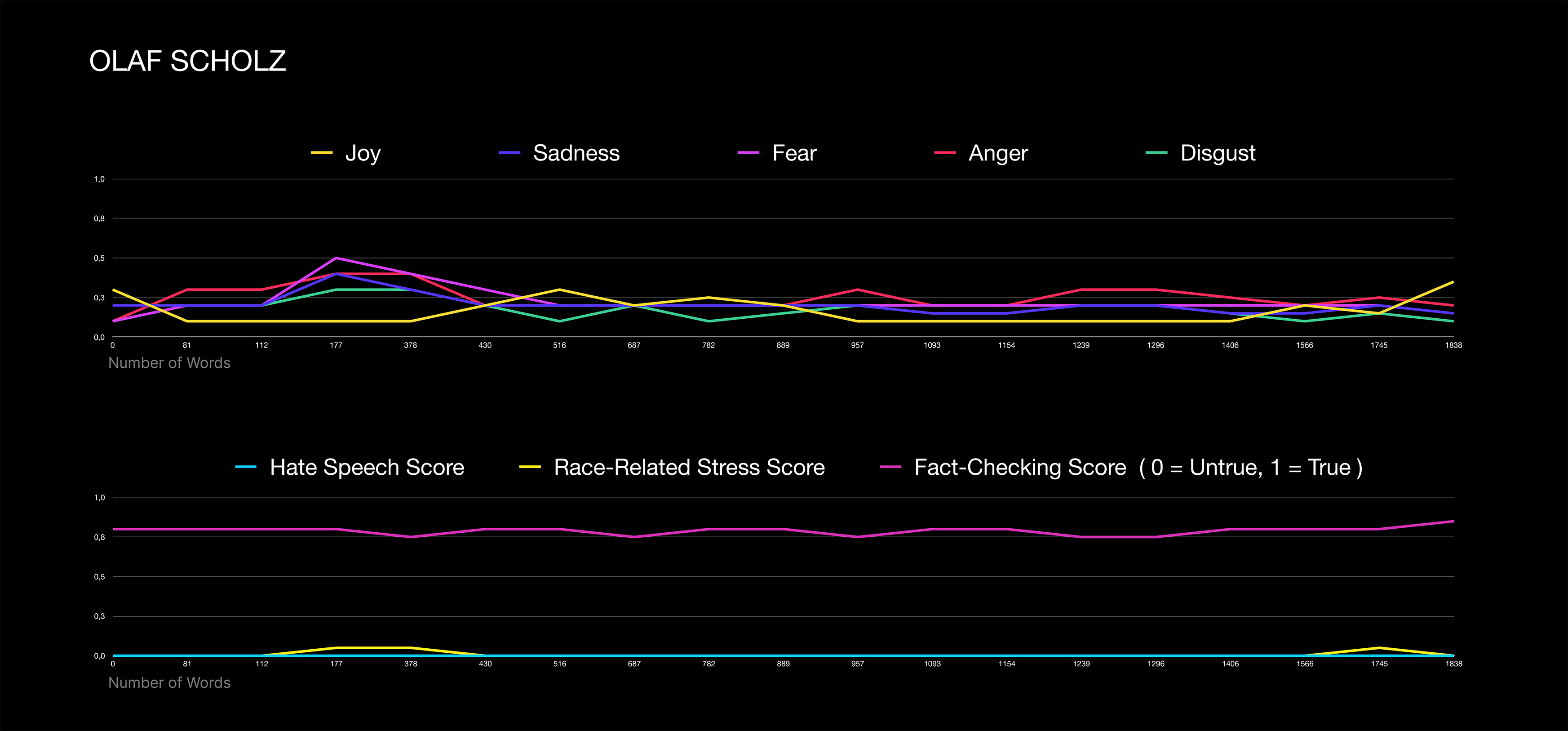
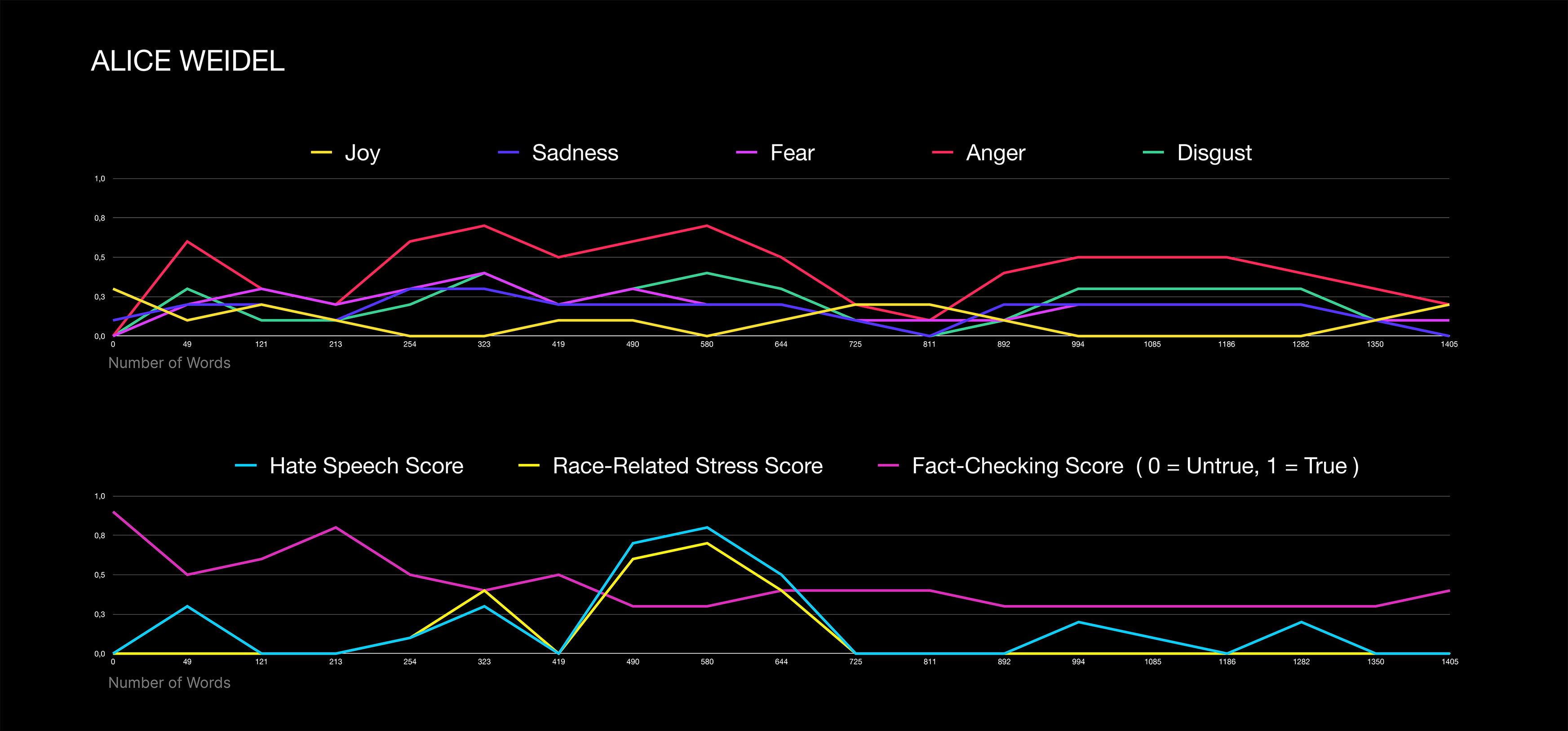
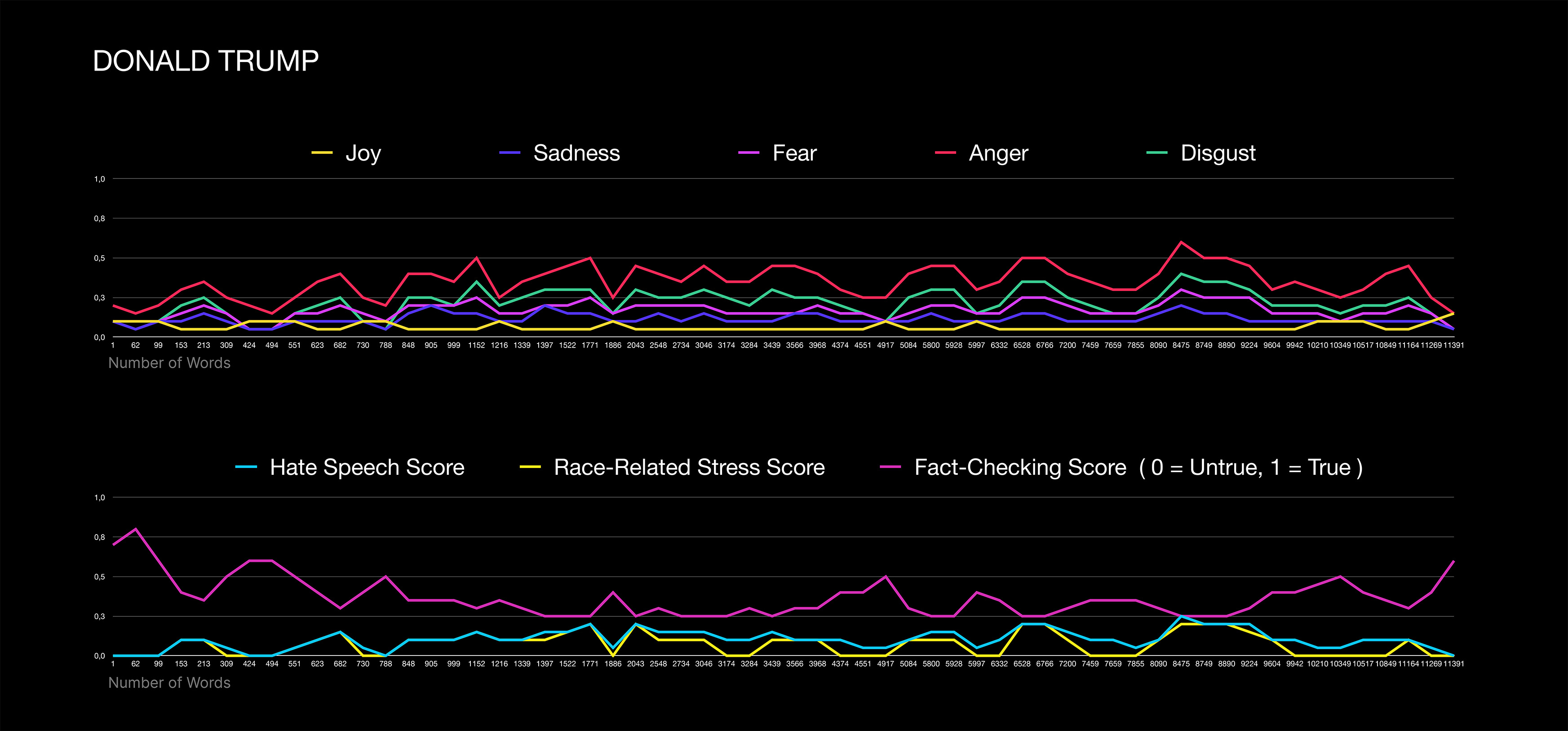
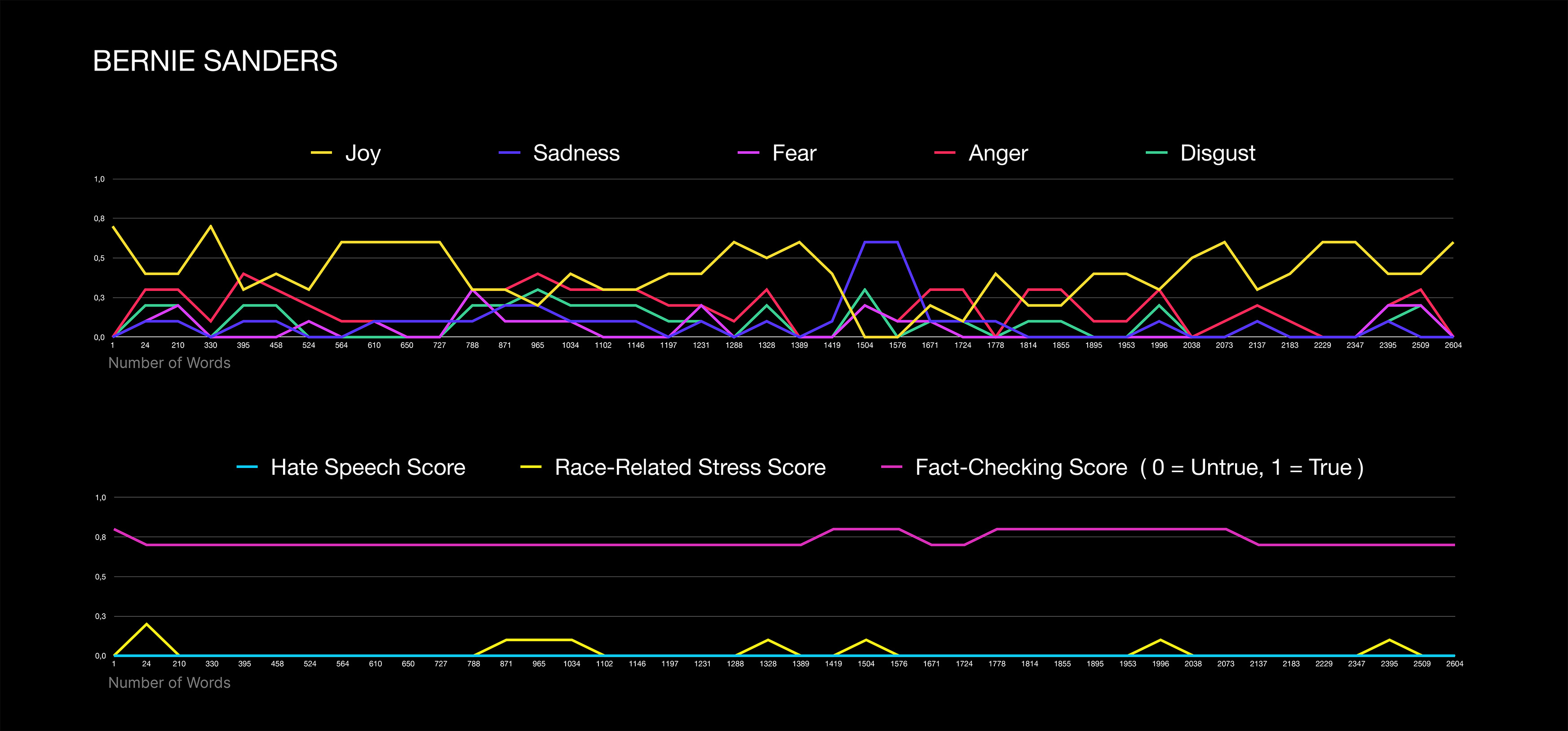
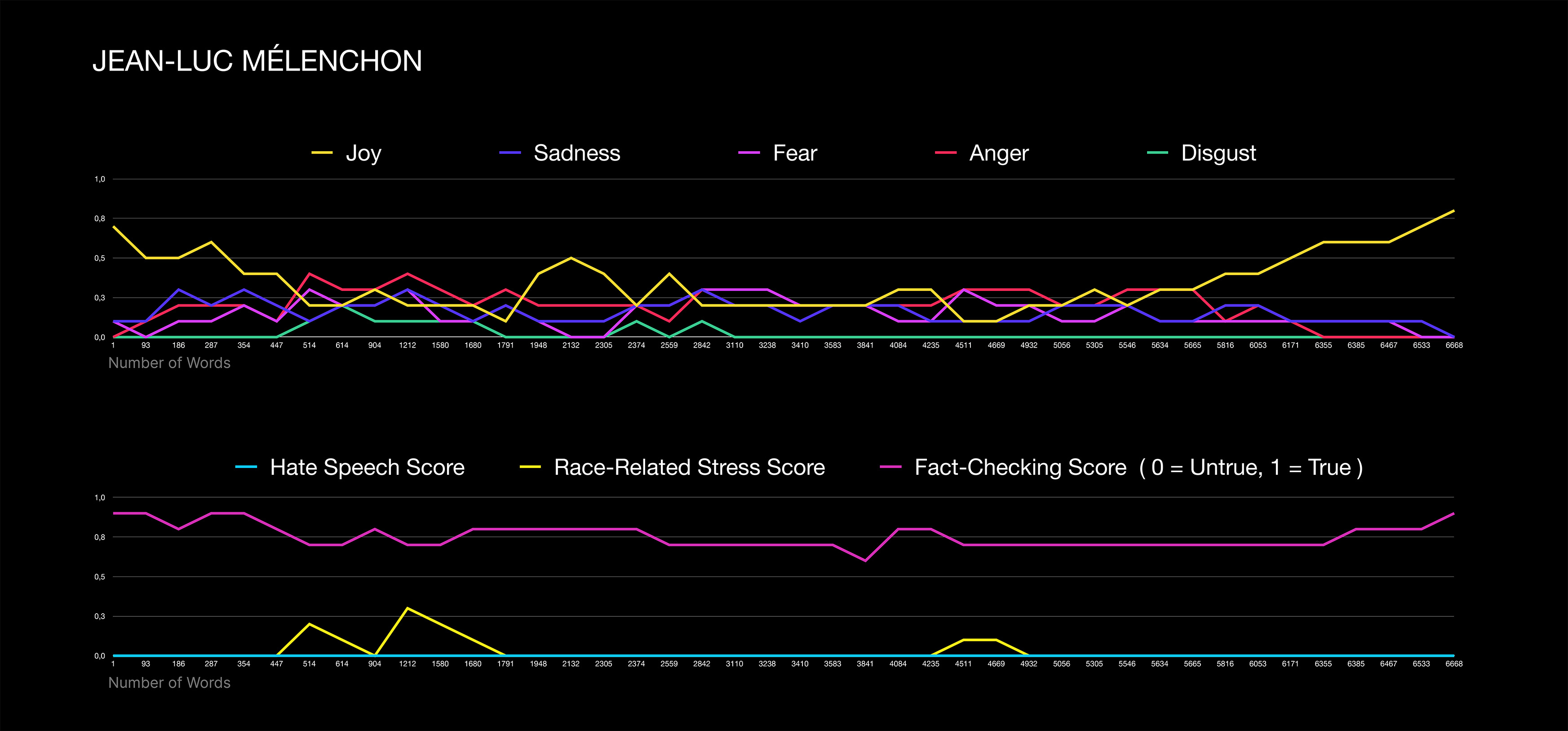
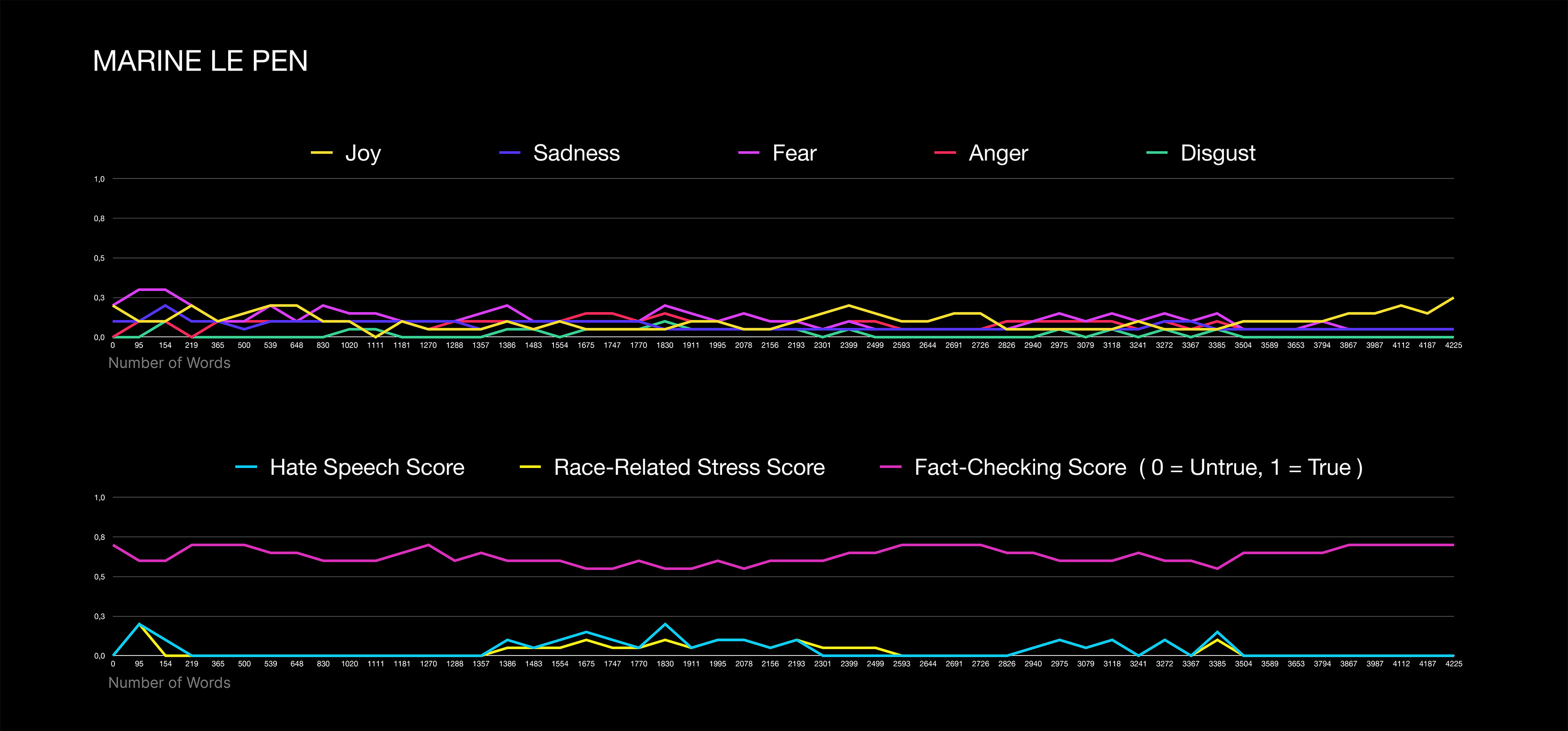
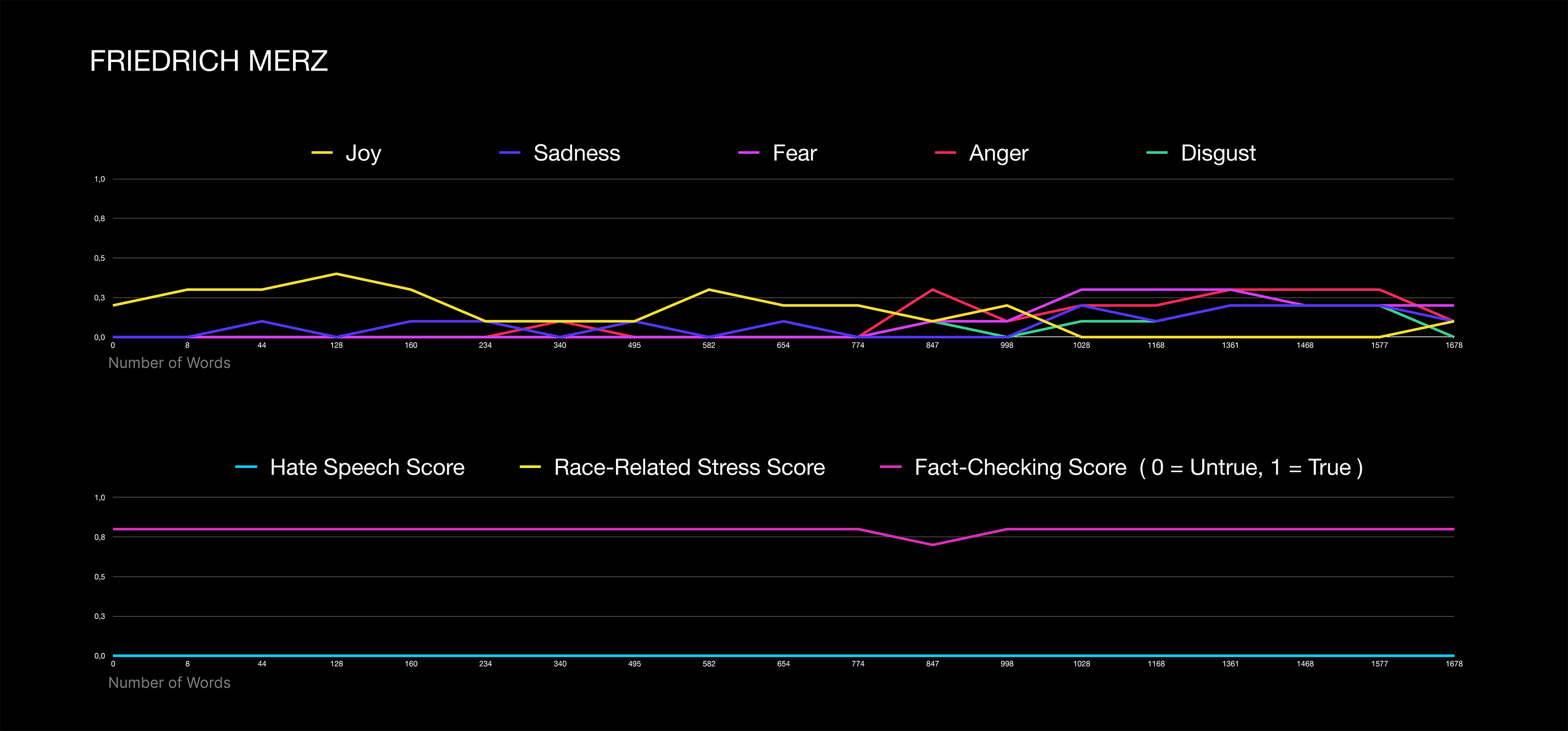
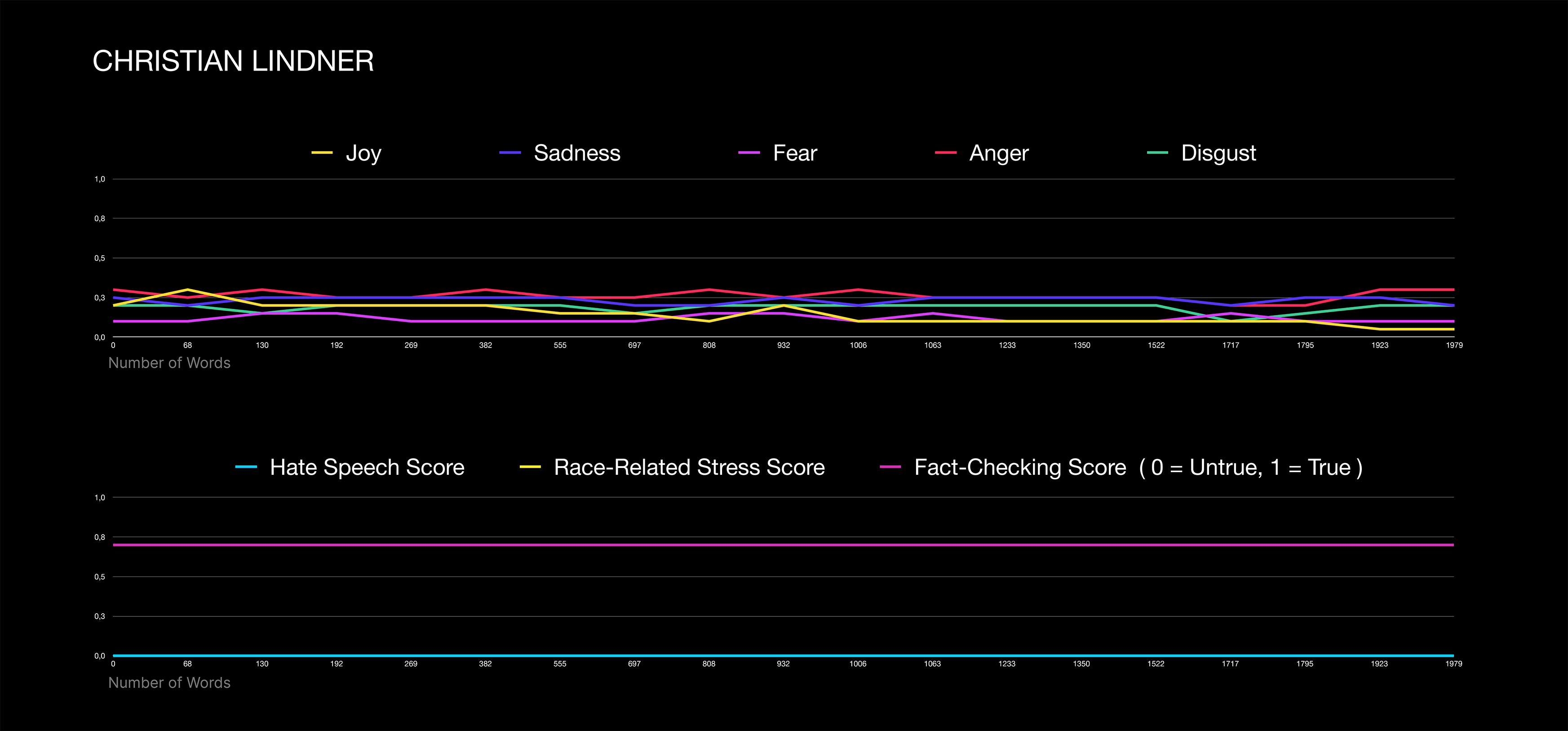
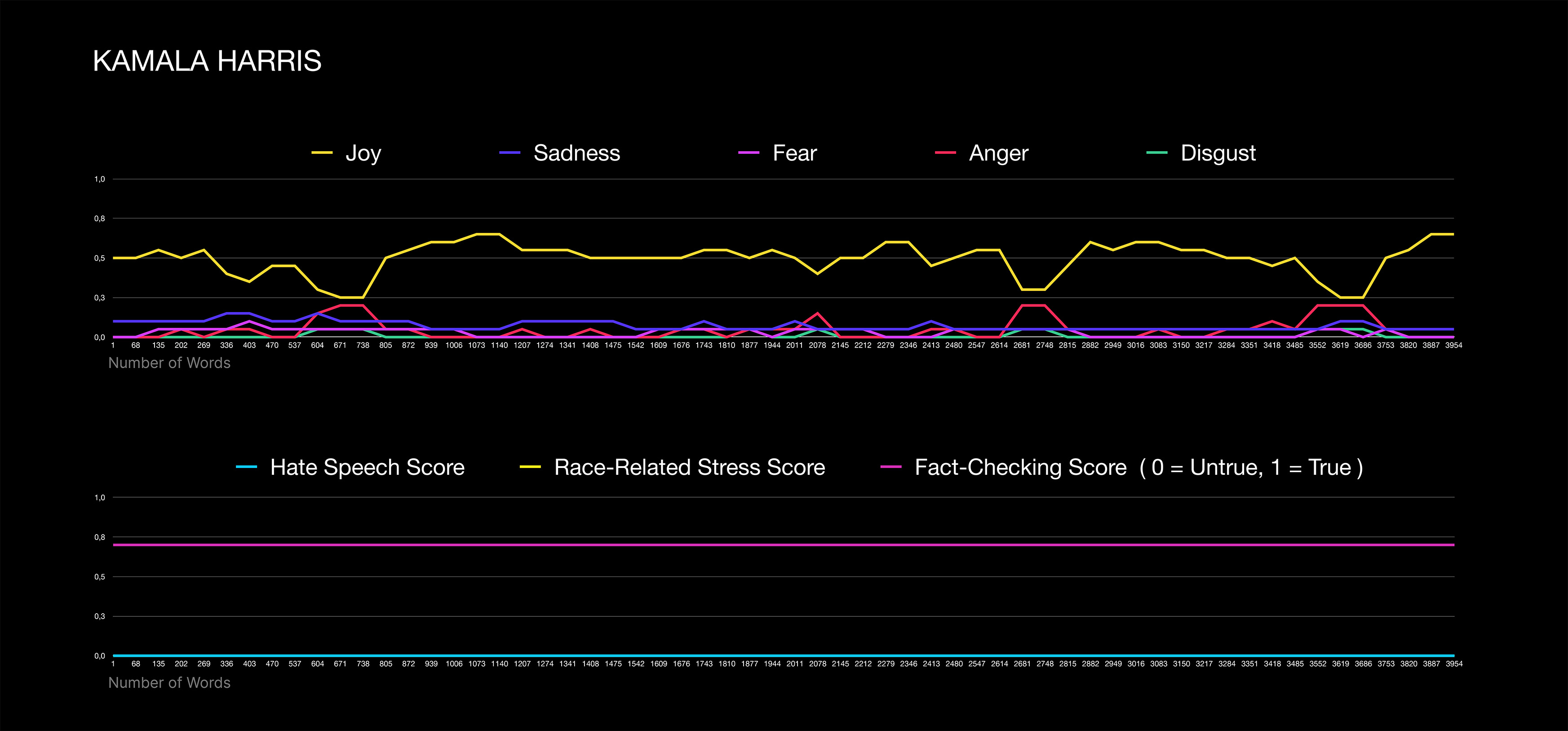
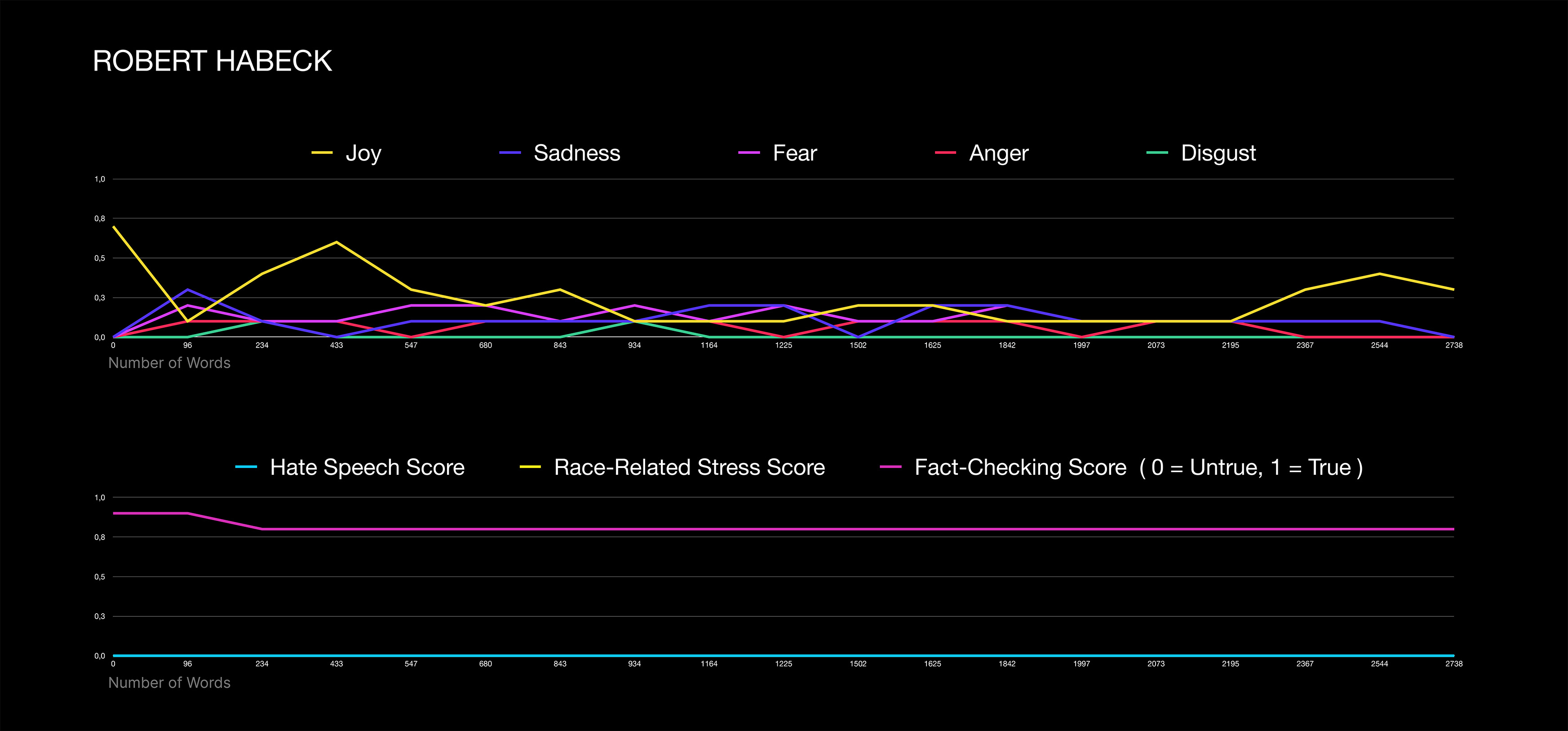
TOP GRAPHS
Captures emotional intensities over time, showing how joy or fear can fluctuate within a single speech.
BOTTOM GRAPHS
Tracks hate speech potential, race-related stress, and fact checking accuracy.
HATE SPEECH
Language targeting or demeaning a person or group based on attributes such as race, religion, or gender, highlighting potentially threatening or hostile phrases.
RACE-RELATED STRESS
Gauges explicit or implicit references to racial tension or bias, without automatically assigning blame.
FACT-CHECKING SCORE
A rough measure of how plausible or supported statements appear, rather than definitive proof of their correctness.
To give you a simplified overview, here’s how the AI conducted the analysis.
THE POLITICAL SPECTRUM
The classification of German politicians within the political spectrum was based on voter self-assessment, drawing on a survey conducted by the German Political Science Association.
SELECTION OF THE SPEECHES
For each segment of the political spectrum, we selected two German politicians as well as one European and one U.S. politician. We provided the AI with transcripts from one of the first speeches each politician gave at the beginning of their latest campaign rally.
LEVEL OF ANALYSIS
The AI examined each speech on two main levels:
Document-Level Analysis: The speech as a whole was analyzed to determine the overall emotional tone, sentiment, and key themes.
Paragraph-Level Analysis: Each individual paragraph within the speech was analyzed separately, providing detailed insights into how sentiments and emotions evolved throughout the speech.
AI-DRIVEN EMOTIONAL & SENTIMENT ANALYSIS
The AI detected the emotions joy, sadness, fear, anger, and disgust. This allowed the detection of both obvious and subtle emotions, categorizing the overall sentiment as positive, negative, or neutral.
IDENTIFYING STRONG LANGUAGE
The AI pinpointed words and phrases strongly expressing negative or positive emotions—such as language conveying love or hate—and specifically flagged potentially hateful, racially charged, or emotionally extreme (positive and negative) expressions.
KEYWORDS AND CONTEXT
To highlight central themes, the AI identified the most contextually important keywords and tracked their exact positions within each speech. This highlights how often and in which contexts important topics were addressed.
CHECKING FACTS & TRUTHFULNESS
The AI also evaluated each speech for truthfulness, providing an indication of how accurate or potentially misleading the statements might be.

Planning an exhibition, museum, or installation?