
The Austrian Pavilion at Expo 2025 Osaka unfolds as an immersive composition where music, architecture and spatial sound connect Austria’s cultural heritage with participatory visions of the future.
OUR ROLE Sound Scenography, Musical Direction // CLIENT Federal Ministry for Labour and Economy, Austrian Federal Economic Chamber, EXPO Office Austrian Federal Economic Chamber (Alf Netek, Helmut Döller) // GENERAL PLANNER BWM Designers & Architects // ARCHITECTURAL DESIGN & CONCEPT DEVELOPMENT OF THE GENERAL THEME BWM Designers & Architects // EXHIBITION DESIGN & CONCEPT BWM Designers & Architects in collaboration with facts and fiction // SCENOGRAPHY facts and fiction // PRODUCTION (Sanding) Graf-Holztechnik // STRUCTURAL ENGINEERING Werkraum Ingenieure ZT GmbH // MEP PLANNING Energytech G.m.b.H. // BUILDING PHYSICS K2 Bauphysik GmbH // LANDSCAPE DESIGN PAISAGISTA Landschaftsplanung // PROJECT MANAGEMENT Werner Consult Ziviltechnikergmbh // GENERAL CONTRACTOR Nüssli Gruppe // MUSIC Mozarteum // PHOTOS & VIDEOS Expo Austria
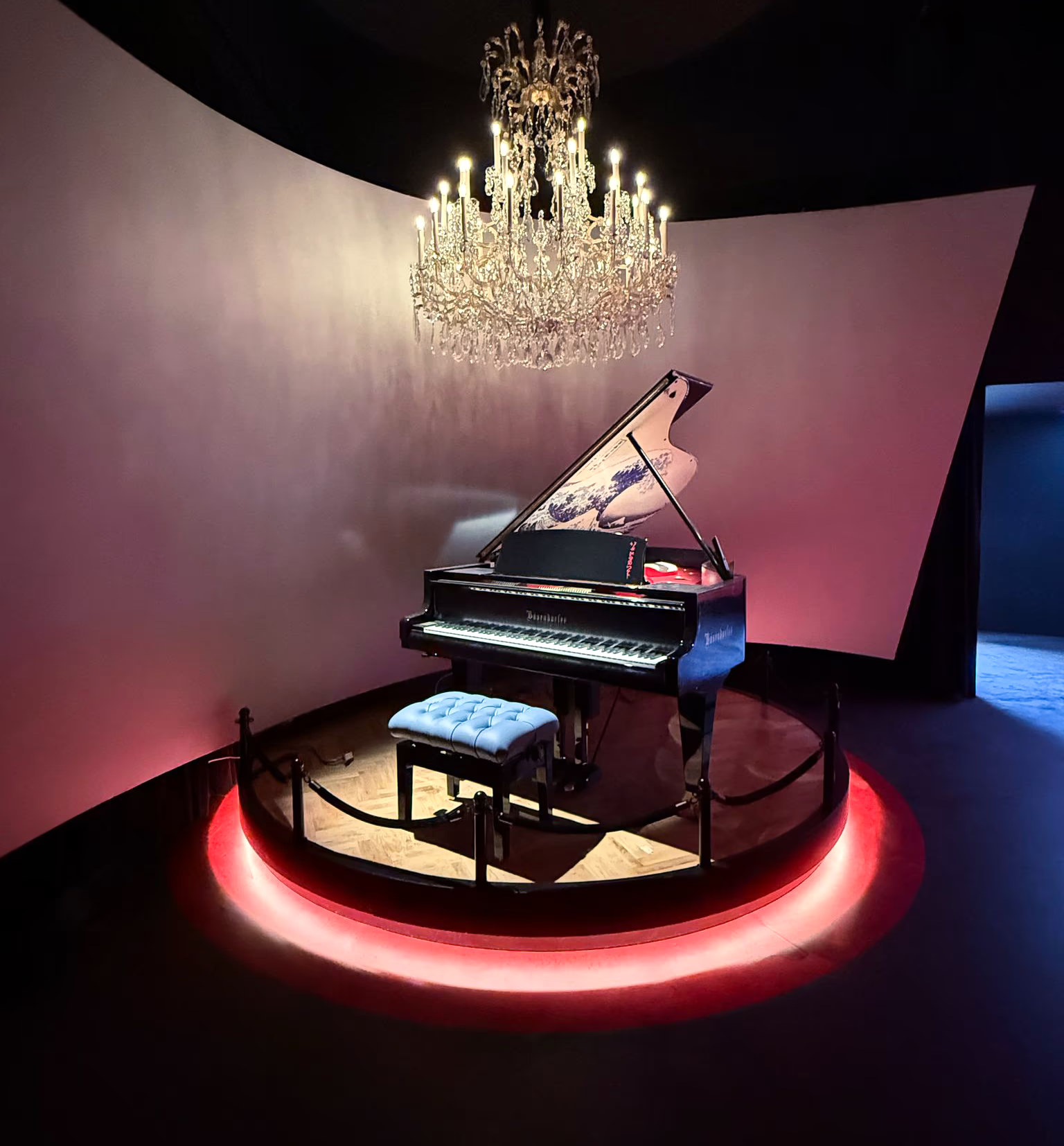
The Austria Pavilion at Expo 2025 Osaka is built around the theme “Composing the Future”. Developed by facts and fiction together with BWM Designers & Architects for the Austrian Federal Economic Chamber, the pavilion presents Austria through the lens of music, composition and collective creativity. Architecture, media and sound are conceived as one interconnected dramaturgical system.
A glimpse of this experience is now available online: Explore the Virtual Tour

The pavilion’s architectural landmark is a monumental spiral sculpture inspired by musical notation and the movement of a score through space. Across multiple exhibition environments, visitors encounter immersive audiovisual installations, spoken narratives and participatory media experiences exploring how Austria’s musical heritage continues to shape contemporary culture, innovation and future thinking.
We developed the pavilion’s sound scenography as a continuously evolving musical structure connecting the different thematic zones. Musical motifs reappear and transform throughout the experience, creating continuity between immersive spaces, transitions and collective interactions. Spatial audio and multichannel composition guide visitors through the pavilion while reinforcing the idea of composition as both cultural heritage and future-oriented practice.
The pavilion culminates in a participatory environment where visitors themselves become part of the composition. Our contribution focused on composition, sound design and the spatial integration of the pavilion’s musical language, shaping how visitors experience architecture, movement and collective participation as one continuous immersive score.

Planning an exhibition, museum, or installation?


